Prepare the skewers and tofu. Soak 4 bamboo skewers in water while you prepare the dough if you will toast the dango in a skillet. Lightly drain the tofu and mash it with a fork until smooth and free of large lumps. Bring a medium pot of water to a gentle boil. Soft tofu gives a more tender result than very firm tofu; start without adding extra water.
Mix and shape the dough. Add the sweet rice flour to the mashed tofu and knead until a soft, cohesive dough forms. If dry or cracking, knead in water 1 teaspoon at a time; if very sticky, dust with a little more sweet rice flour. Divide into 16 equal portions and roll into smooth balls roughly 1 inch (2.5 cm) across. Aim for similar-sized balls so they cook evenly. Weighing the dough before dividing is helpful.
Boil and cool the dango. Add the balls to gently boiling water in batches if necessary. Stir once carefully so they do not stick. Once they float, continue simmering for about 2 minutes more so the centers cook through. Lift out with a slotted spoon and place briefly in a bowl of cool water. Drain thoroughly and pat dry. Floating alone is not proof of doneness; allow the additional cooking time.
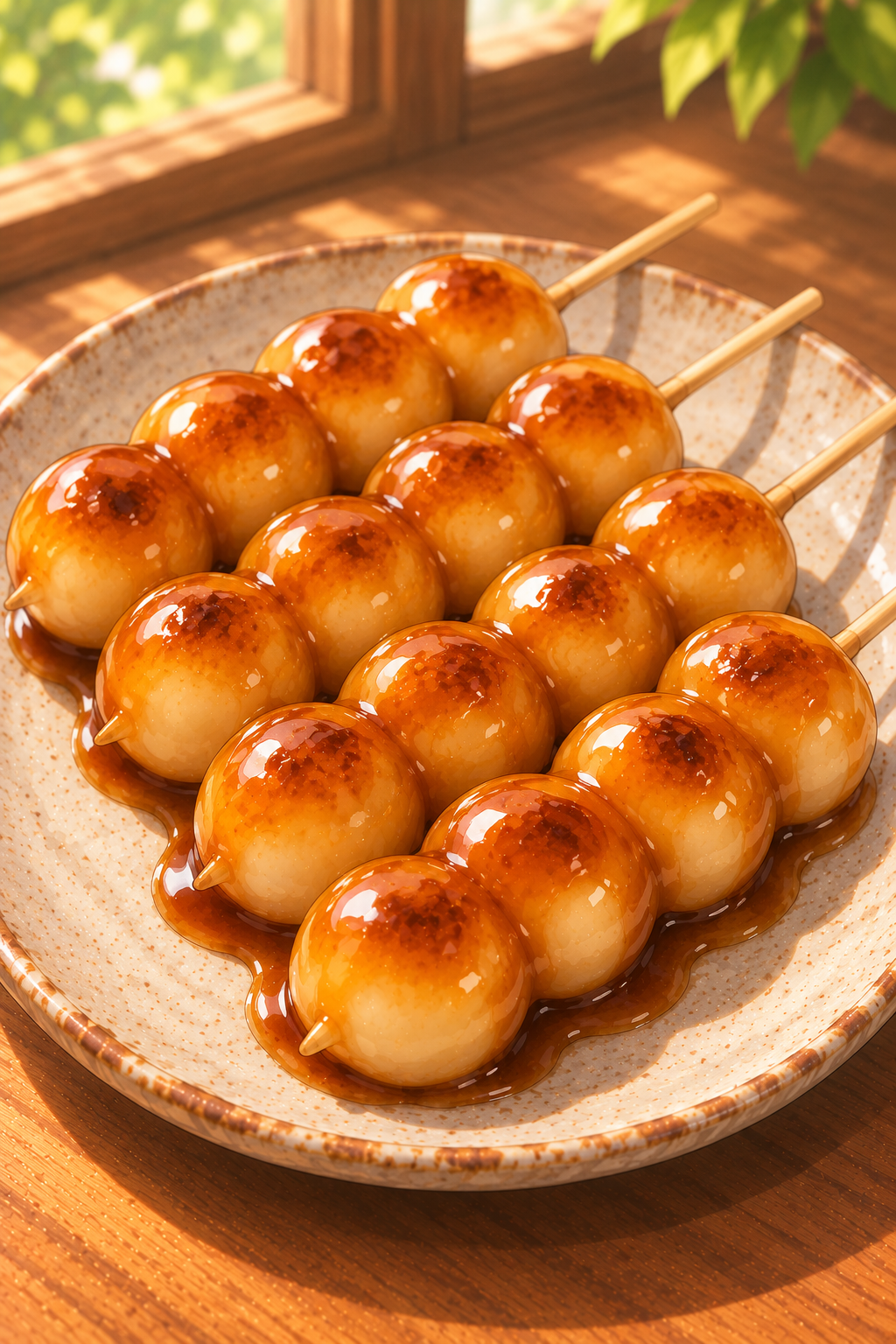
Skewer and lightly brown. Thread 4 drained dumplings onto each of 4 skewers. Warm a nonstick skillet over medium heat, brushing with up to 1 teaspoon neutral oil only if needed. Toast the skewers for about 1 minute on each side, turning gently until small golden spots appear. Transfer to a plate. Light browning adds flavor without making the dango hard or dry.
Cook the glaze. In a small saucepan whisk together the brown sugar, soy sauce, and 1/3 cup water, then bring to a gentle simmer. In a small cup mix the cornstarch with 1 tablespoon cold water until smooth. Slowly pour the slurry into the saucepan while whisking. Simmer for about 1–2 minutes until glossy and lightly thickened. Keep whisking while adding the slurry so no lumps form; the glaze thickens further as it cools.
Glaze and serve. Brush or spoon the warm glaze over the 4 skewers, turning to coat the dumplings. Serve promptly while warm and tender. One skewer with four rice dumplings is one serving; chewy dango should be eaten slowly and chewed thoroughly.