Samurai Champloo-Inspired Mitarashi Dango (Sweet Soy Glazed Skewers)
An unofficial Samurai Champloo-inspired Japanese dango recipe with tender rice dumplings and a glossy sweet soy glaze.
Sweet Soy Glaze, Wandering-Samurai Mood
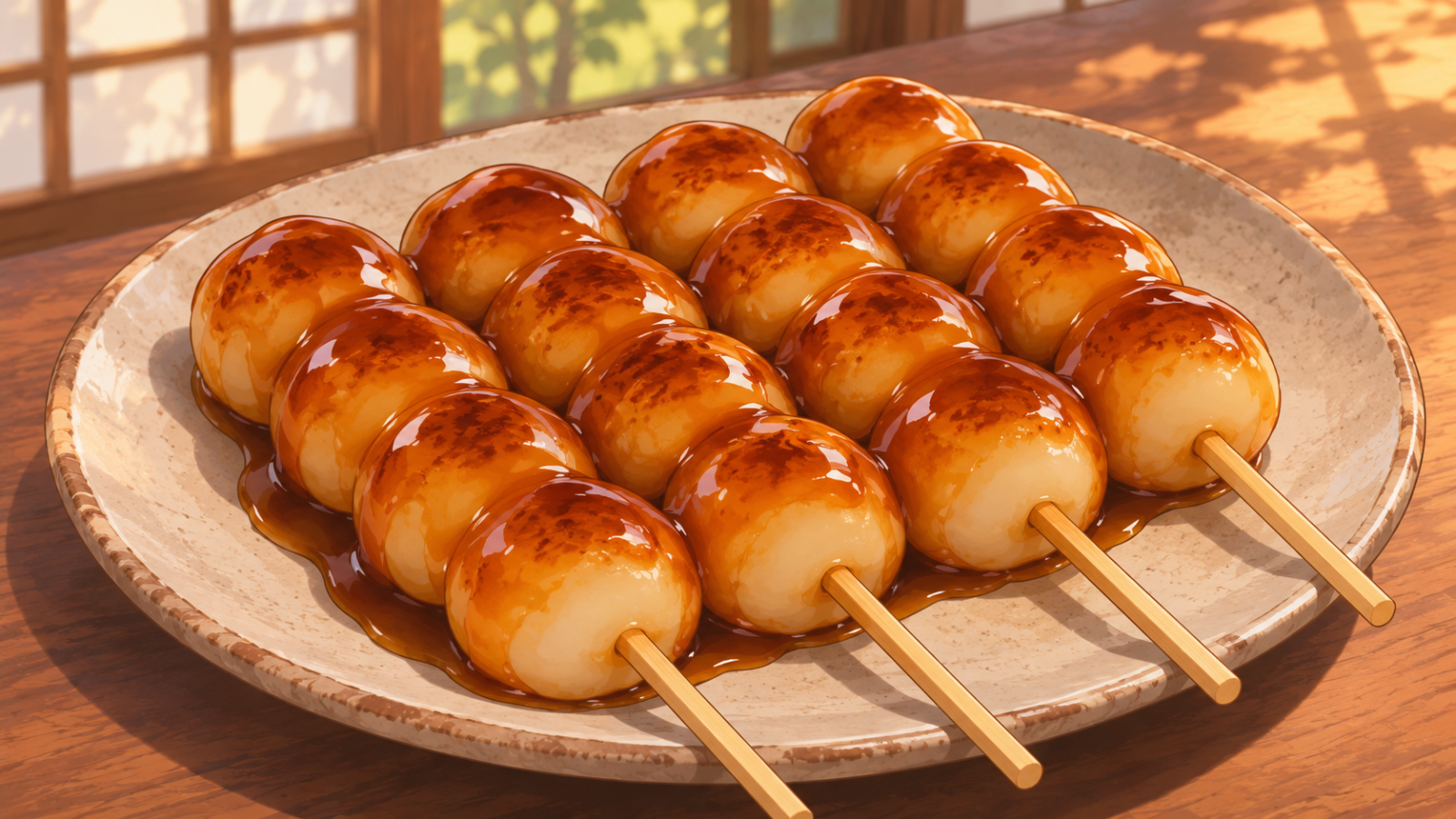
Inspired by the wandering-road atmosphere of Samurai Champloo, these sweet soy glazed dango make a cozy Japanese snack. Soft tofu-and-rice-flour dumplings are threaded onto skewers, lightly browned, and finished with a glossy sauce. This is an independent fan-inspired variation, not an official recipe or a verified recreation of a specific anime scene.
Soft, chewy rice dumplings glazed with a glossy sweet-and-savory soy sauce make a comforting Japanese snack. These Samurai Champloo-inspired mitarashi dango are served four to a skewer, with gently browned edges and just enough sauce to coat each dumpling.
This is an independent, unofficial recipe inspired by the series’ traveling-food atmosphere—not a claim that this particular preparation appears in a verified scene.
Table of Contents
What Is Mitarashi Dango?
Mitarashi dango are Japanese rice dumplings served on skewers with a shiny sauce made from soy sauce and sugar. The contrast is what makes them distinctive: mild, pleasantly chewy dumplings meet a lightly salty caramel-like glaze.
This homemade variation uses soft tofu and sweet rice flour (mochiko) for a tender texture. The tofu is part of the dough, not a savory filling, and its mild flavor stays in the background. After boiling, the dumplings are briefly browned in a skillet and brushed with warm sauce.
Tips for Soft, Chewy Dango
Use the Right Rice Flour
Look for mochiko, shiratamako, or a product labeled glutinous/sweet rice flour. Ordinary rice flour behaves differently and is not a direct one-for-one replacement. Use a kitchen scale when possible, because different brands of sweet rice flour can pack differently into a cup.
Adjust the Dough by Feel
Mash the tofu until smooth, then work in the flour. The dough should feel soft and pliable but hold a rolled ball without spreading. If it cracks, knead in a teaspoon of water; if it sticks heavily, add a little more flour. Keep the portions similar in size so they cook evenly.
Cook Beyond the First Float
Lower the balls into gently boiling water without crowding the pot. When they rise to the surface, continue cooking for roughly two more minutes so their centers cook through. Move them briefly into cool water, then drain and pat them dry before skewering.
Toast Lightly, Not Aggressively
Thread four dumplings onto each skewer. Turn the skewers gently in a nonstick skillet over medium heat to add a few lightly golden spots. Avoid prolonged frying, which can dry or toughen the dumplings.
Add the Glaze at the End
Mix cornstarch with cold water before adding it to the warm soy-sugar mixture. Simmer and whisk until the sauce turns glossy and lightly thickened. Brush or spoon it over the dango immediately before serving.
Serving Suggestions
Serve one skewer per person as a sweet afternoon snack. The dumplings are best warm and fresh, while the glaze is shiny and the texture remains tender. Eat slowly and chew thoroughly: sticky, chewy rice dumplings can pose a choking risk, particularly for young children and people with swallowing difficulties.
Hidden Flavours Village is an independent fan-inspired food website and is not affiliated with or endorsed by the creators or rights holders of Samurai Champloo.
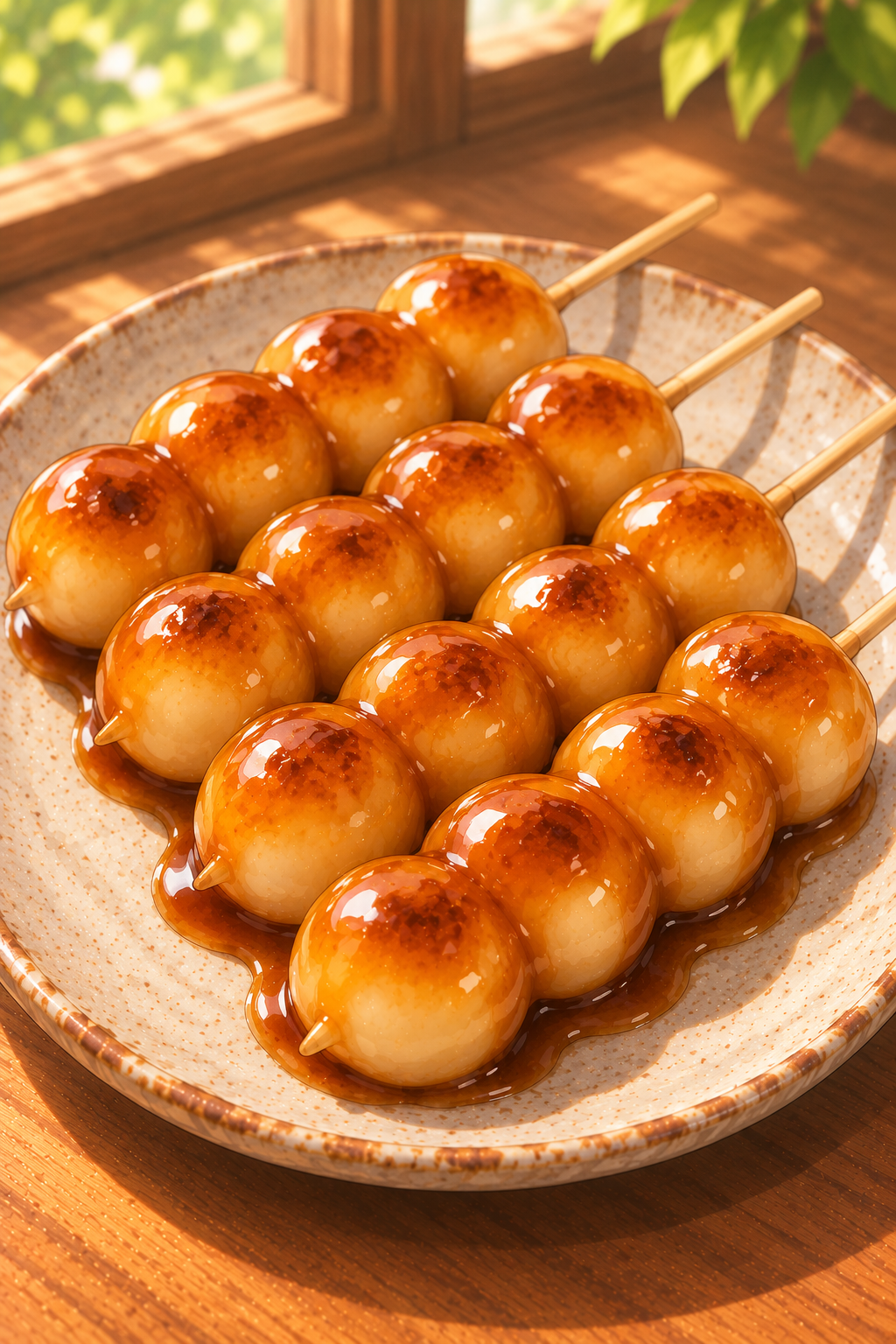

Samurai Champloo-Inspired Mitarashi Dango (Sweet Soy Glazed Skewers)
Ingredients
Method
- Prepare the skewers and tofu. Soak 4 bamboo skewers in water while you prepare the dough if you will toast the dango in a skillet. Lightly drain the tofu and mash it with a fork until smooth and free of large lumps. Bring a medium pot of water to a gentle boil. Soft tofu gives a more tender result than very firm tofu; start without adding extra water.
- Mix and shape the dough. Add the sweet rice flour to the mashed tofu and knead until a soft, cohesive dough forms. If dry or cracking, knead in water 1 teaspoon at a time; if very sticky, dust with a little more sweet rice flour. Divide into 16 equal portions and roll into smooth balls roughly 1 inch (2.5 cm) across. Aim for similar-sized balls so they cook evenly. Weighing the dough before dividing is helpful.
- Boil and cool the dango. Add the balls to gently boiling water in batches if necessary. Stir once carefully so they do not stick. Once they float, continue simmering for about 2 minutes more so the centers cook through. Lift out with a slotted spoon and place briefly in a bowl of cool water. Drain thoroughly and pat dry. Floating alone is not proof of doneness; allow the additional cooking time.
- Skewer and lightly brown. Thread 4 drained dumplings onto each of 4 skewers. Warm a nonstick skillet over medium heat, brushing with up to 1 teaspoon neutral oil only if needed. Toast the skewers for about 1 minute on each side, turning gently until small golden spots appear. Transfer to a plate. Light browning adds flavor without making the dango hard or dry.
- Cook the glaze. In a small saucepan whisk together the brown sugar, soy sauce, and 1/3 cup water, then bring to a gentle simmer. In a small cup mix the cornstarch with 1 tablespoon cold water until smooth. Slowly pour the slurry into the saucepan while whisking. Simmer for about 1–2 minutes until glossy and lightly thickened. Keep whisking while adding the slurry so no lumps form; the glaze thickens further as it cools.
- Glaze and serve. Brush or spoon the warm glaze over the 4 skewers, turning to coat the dumplings. Serve promptly while warm and tender. One skewer with four rice dumplings is one serving; chewy dango should be eaten slowly and chewed thoroughly.
Notes
- Makes 16 dango balls on 4 skewers, or four servings of one skewer each.
- Plan for about 20 minutes of preparation and 20 minutes of cooking; total time is approximately 40 minutes.
- Use sweet/glutinous rice flour (mochiko), not ordinary rice flour. Weight measurements are the most consistent.
- The tofu quantity assumes soft or silken tofu; moisture varies by brand. Adjust with a teaspoon of water or a dusting of sweet rice flour as needed.
- The chewy, sticky texture of dango can pose a choking risk. Not suitable as whole balls for young children or people with swallowing difficulties. Eat slowly and chew thoroughly.
- Contains soy. Check soy sauce labels for wheat if you need to avoid gluten; glutinous rice flour itself does not contain wheat gluten.
- Best served fresh. Refrigerate leftovers promptly; the rice dumplings may become firmer after chilling. Reheat gently until hot throughout before eating.